To Refresh this Blog, click here: http://www.newherbanism.blogspot.com
The decades-long explosion in residential square footage may be coming to an end, says Gopal Ahluwalia, the National Association of Home Builder’s vice president for research. Although the size of the average home has been on the rise, to 2,495 last year from 1,500 square feet in 1973, consumers are beginning to choosse higher quality living spaces over additional square footage, according to Ahluwalia, who spoke at the recent International Builders Show in Orlando, Fla. The curious thing is that while average size of new homes has increased by about 1,000 square feet or 66% in 33 years, the average household size has been dropping from 3.01 in 1973 to 2.58 in 2006. This means that the percapita square footage in new homes has increased from 498 square feet per person in 1973 to 967 square feet per person in 2006. That is a whopping 94% increase in area per person. No wonder more and more households are finding new homes to be less and less affordable.
Architects, designers, manufacturers, and marketing experts who were asked by NAHB about their expectations for future homes agreed that home size would slip into the 2,300- to 2,500-square-foot range by 2015. NAHB says that two-story homes will continue to dominate as increasing construction costs drive choices. “As housing prices go up, so too does the share of two-story homes goes up says Ahluwalia, noting that two story construction is less expensive than one story on a square-foot basis. U.S. Census Bureau data shows that 55 percent of the homes built in 2005 had two or more stories.
Not only is the two story house more affordable, but two story homes make a great deal of sense for the narrower lots in new traditional neighborhoods. Many of the most attractive homes in new urban communities are two stories. TND architects and home builders have created many attractive and functional two story plans for homes with rear facing garages that permit parking access from rear alleys.
So the key to affordability is a smaller home that is also built efficiently. Two story homes are just the ticket. That is why you see so many of them in the new traditional neighborhoods being built by the new urban TND town founders across the country.
Be sure to visit the website for Omaha's first new traditional neighborhood: http://www.whatsnewonstatestreet.com
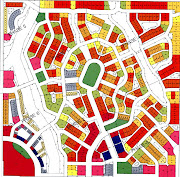
Click here to see the site plan : http://www.whatsnewonstatestreet.com/info/day_06siteplan.html
Go here http://www.whatsnewonstatestreet.com/info/ideas_architecture.html to see examples of two story homes and how they work in the new tradtional neighborhood.
Thursday, March 29, 2007


Tuesday, March 20, 2007
Your New Urban Factoid of the Day
Click here to refresh this blog: http://newherbanism.blogspot.com
Since 1995, the U.S. population has grown by 12 percent while the number of vehicle miles traveled (VMT) has grown by 24 percent . . .
but transit use is up by 30 percent to 10.1 billion trips for the first time in 49 years.
Discuss . . . .
Source: The American Public Transportation Association
Since 1995, the U.S. population has grown by 12 percent while the number of vehicle miles traveled (VMT) has grown by 24 percent . . .
but transit use is up by 30 percent to 10.1 billion trips for the first time in 49 years.
Discuss . . . .
Source: The American Public Transportation Association
Tuesday, February 13, 2007
Suburbans Want More Urban
Click here to refresh this blog: http://www.newherbanism.blogspot.com/
Suburban cities are working with developers to create new town centers, many of them modeled after Celebration, Fla., developed by Walt Disney Co.
Urban planners say the best reason for creating a downtown is that it encourages commerce. "It's important because that's where retail's going. Shoppers want . . . an enjoyable social experience. They want to be in real places," says John Norquist, president and chief executive of Congress for the New Urbanism, a nonprofit group that encourages the building of such compact, pedestrian-friendly communities.
One of the challenges is the need to include affordable housing even though land costs are high. "Aside from diversity and all those wonderful things, no society works without some number of service workers," says David Smith, president of Recap Advisors, an affordable-housing consulting firm in Boston. "The closer they are to the jobs they do, the happier everybody is."
Another issue is that new downtowns seem contrived. Town-center designers are trying to combat that in part by hiring teams of architects so buildings aren’t all designed by one person and by selling lots separately rather than turning over large tracts to just one developer.
Source: Orlando Sentinel, Sandra Pedicini (02/12/07)
Saturday, February 10, 2007
"Miles per House" Bodes Well for the New Traditional Neighborhood
Energy Costs to Become Top Buyer Concern
Click here to refresh: http://www.newherbanism.blogspot.com/
Look for “house miles” to become an important consideration in home purchases in coming years, say land-use experts who gathered for the Urban Land Institute’s recent meeting in Denver.
“A new generation of home buyers is looking at the world differently, and to them, green building will be a given," says John McIlwain, a senior resident fellow of ULI. "The issue of energy savings will be a fundamental driver in their decisions on what and where to buy." The cost of distance, along with heating and cooling, has a direct impact on housing affordability, McIlwain pointed out, noting that “miles per house” — the number of miles a home is from employment, retail, education, and entertainment — could become a standard measurement of location desirability.
A 2005 ULI survey of consumers found them willing to combine more trips and use mass transit more to cut down on fuel consumption, said Robert Dunphy, who's also a senior resident fellow of ULI. Transportation spending is the second largest component of consumer expenses, currently taking up an average of 19 percent of their monthly income (monthly home mortgage payments generally at least 33 percent).
As the cost of energy plays a more important role in home-buying decisions, house miles will become a deal breaker or maker. That trend will drive the development of sustainable housing and "green" communities. The land-use experts discussed some designs that are now gaining traction, such as close-in infill projects, more downtown housing, and more mixed-use projects in urban centers and on the urban fringe.
Source: Daily Real Estate News, by Camilla McLaughlin for REALTOR® Magazine Online
Monday, February 05, 2007
U.S. Homebuyers will Pay Premium for "Green" Homes
Another Very Good Sign for Traditional Neighborhood Development...
Click here to refresh: http://www.newherbanism.blogspot.com/
A survey released this week by Green Builder Media and Imre Communications reveals that U.S. homebuyers are willing to pay a premium for more environmentally friendly, green-built homes. The study surveyed more than 250 residential builders across the United States. A wide range of builders was included, from the affordable, market rate, luxury/semi-custom, custom, multi-family and developer categories.
More than half of homebuilders surveyed report that buyers are willing to pay a premium of between 11-25 percent for green-built homes. The same builders report that the average green homebuyer is between the ages of 35-50 with a college degree and a fair understanding of green products.
Source: Real Trends Newsletter, February 2, 2007
This is VERY good news for Traditional Neighborhood Development, because the same people who understand and value green building will understand and value the principles and benefits of living in a new traditional neighborhood.
Wednesday, December 27, 2006
Top 10 Trends That Shaped U.S. Cities in 2006
Top 10 Trends That Shaped U.S. Cities in 2006
Click here to refresh: http://www.newherbanism.blogspot.com/
For 10 years, Brookings Institution’s Metropolitan Policy Program has charted trends and highlighted challenges facing America’s metro areas. This year’s big picture: Statistics might portray an economy on the rebound, but many parts of the country and many households don’t share in that success.
Ten noteworthy trends, according to Brookings, that standout for 2006:
1. For the first time, there are more poor residents in the suburbs than in central cities.
2. Six percent of the population in large U.S. metropolitan areas live in exurbs, communities on the fringe of urban centers. Exurb characteristics: 20 percent of workers commute to city jobs; low housing density; high population growth.
3. More than one-third of the nation's loss of manufacturing jobs between 2000 and 2005 occurred in seven Great Lakes states: Illinois, Indiana, Michigan, New York, Ohio, Pennsylvania, and Wisconsin.
4. America's older, inner-ring first suburbs, the earliest suburbs that sprang up around center cities before and during World War II, make up 20 percent of the nation's population and are more diverse and older than the nation as a whole.
5. The average U.S. household spends 19 percent of its budget on transportation, rendering household location a key component of housing affordability.
6. Nationwide, more than 4.2 million lower income home owners pay a higher than average APR for their mortgage. Lower income households, those earning less than $30,000, pay 6.9 percent compared with an average rate of 6.5 percent for those earning $30,000 to $60,000. Those with incomes above $120,000 paid a rate of approximately 5.5 percent.
7. The leading refugee destination metro areas have shifted away from traditional immigrant gateways, such as Los Angeles and New York, over the past two decades to newer gateways, such as Atlanta, Portland, Seattle.
8. The fastest-growing metropolitan areas for minority populations from 2000 to 2004 now closely parallel the fastest-growing areas in the nation. Las Vegas, Atlanta, Orlando, and Phoenix are now prominent centers of minority population growth.
9. Middle-income neighborhoods as a proportion of all metropolitan neighborhoods declined to 41 percent in 2000 from 58 percent in 1970, disappearing faster than the share of middle class households in these metro areas.
10. Of the $109 billion in federal appropriations dedicated to Gulf Coast funding in the first year after Hurricane Katrina, only about $35 billion went toward the long-term recovery of the region.
Source: Camilla McLaughlin for REALTOR® Magazine Online, December 27, 2006
Click here to refresh: http://www.newherbanism.blogspot.com/
For 10 years, Brookings Institution’s Metropolitan Policy Program has charted trends and highlighted challenges facing America’s metro areas. This year’s big picture: Statistics might portray an economy on the rebound, but many parts of the country and many households don’t share in that success.
Ten noteworthy trends, according to Brookings, that standout for 2006:
1. For the first time, there are more poor residents in the suburbs than in central cities.
2. Six percent of the population in large U.S. metropolitan areas live in exurbs, communities on the fringe of urban centers. Exurb characteristics: 20 percent of workers commute to city jobs; low housing density; high population growth.
3. More than one-third of the nation's loss of manufacturing jobs between 2000 and 2005 occurred in seven Great Lakes states: Illinois, Indiana, Michigan, New York, Ohio, Pennsylvania, and Wisconsin.
4. America's older, inner-ring first suburbs, the earliest suburbs that sprang up around center cities before and during World War II, make up 20 percent of the nation's population and are more diverse and older than the nation as a whole.
5. The average U.S. household spends 19 percent of its budget on transportation, rendering household location a key component of housing affordability.
6. Nationwide, more than 4.2 million lower income home owners pay a higher than average APR for their mortgage. Lower income households, those earning less than $30,000, pay 6.9 percent compared with an average rate of 6.5 percent for those earning $30,000 to $60,000. Those with incomes above $120,000 paid a rate of approximately 5.5 percent.
7. The leading refugee destination metro areas have shifted away from traditional immigrant gateways, such as Los Angeles and New York, over the past two decades to newer gateways, such as Atlanta, Portland, Seattle.
8. The fastest-growing metropolitan areas for minority populations from 2000 to 2004 now closely parallel the fastest-growing areas in the nation. Las Vegas, Atlanta, Orlando, and Phoenix are now prominent centers of minority population growth.
9. Middle-income neighborhoods as a proportion of all metropolitan neighborhoods declined to 41 percent in 2000 from 58 percent in 1970, disappearing faster than the share of middle class households in these metro areas.
10. Of the $109 billion in federal appropriations dedicated to Gulf Coast funding in the first year after Hurricane Katrina, only about $35 billion went toward the long-term recovery of the region.
Source: Camilla McLaughlin for REALTOR® Magazine Online, December 27, 2006
Thursday, December 07, 2006
Herb on the Radio . . . Again!
1110 KFAB at 8:00 AM Saturday, December 9, 2006 . . .
Click here to refresh: http://www.newherbanism.blogspot.com/
My next guest shot on the radio will be on the Grow Omaha show which airs at 8:00 a.m. every Saturday morning on radio 1110AM KFAB. Grow Omaha is hosted by Trenton Magid and Jeff Beals with Coldwell Banker Commercial World Group. I will be on the show this Saturday, December 9th.
The KFAB call-in numbers are 558-1110 or 1-800-543-1110.
Be sure to tune in right at 8:00 because I will be on during the first half of the program. Call in and support traditional neighborhood development in the Omaha area.
Thanks for your continuing interest,
Herb
Tuesday, December 05, 2006
Let's Say Thanks . . .
Click here to refresh: http://www.newherbanism.blogspot.com/
Here is something cool that Xerox is doing: if you go to this web site, www.LetsSayThanks.com, you can pick out a thank you card, add a message and Xerox will print it and send it to a soldier who is currently serving in Iraq. You can't pick out who gets your card, but it will go to some member of the armed services.
How amazing it would be if every service memember got a card this Holiday season thanking him or her for serving our nation. Please send a card. Send several. It is FREE, annonymous and it only takes a second. Forward this link on to your family and friends after you send your card. It will make you feel wonderful.
Here is something cool that Xerox is doing: if you go to this web site, www.LetsSayThanks.com, you can pick out a thank you card, add a message and Xerox will print it and send it to a soldier who is currently serving in Iraq. You can't pick out who gets your card, but it will go to some member of the armed services.
How amazing it would be if every service memember got a card this Holiday season thanking him or her for serving our nation. Please send a card. Send several. It is FREE, annonymous and it only takes a second. Forward this link on to your family and friends after you send your card. It will make you feel wonderful.
Sunday, November 26, 2006
More In-Touch but Less Connected . . .
Signs of the Times . . .
More In-Touch but Less Connected
Lynn Smith-Lovin is a Duke University Sociologist and coauthor of a study titled “Social Isolation in America.” The study is a replica of one done 20 years ago. In only two decades, from 1985 to 2004, the number of people who have no one to talk to has doubled. And the number of confidants of the average American has gone down from three to two.. One quarter reported that they had nobody o talk to, and another quarter were only one person away from nobody.
People did report that that they were closer to their families. Husbands and wives and parents and their adult children may be closer. Our circles seem to have tightened and shrunk while going nuclear and familial. The greatest loss has been in neighbors and friends who will provide help, support, advice and connections to the wider world.
It's become easier to keep extensive relationships over time and distance by cell phone and email, but harder to build the deep ones in our backyards. In the virtual neighborhood, how many have substituted e-mail for intimacy, contacts for confidants, and phone or Facebook for face to face?
We may be six degrees of separation from any other person in the world and one or two people away from loneliness. Who can we talk to about ``important matters"? Who can we count on? As we search for tools to repair this frayed safety net, Americans can take poor, paradoxical comfort from the fact that if they are feeling isolated, they are not alone.
The good news is that the new traditional neighborhood may be one of those tools to repair the disconnectedness of our times. The principles of TND design put people together and help create conditions where community and connectedness can thrive.
Source: Adapted from the Boston Globe, June 30, 2006
More In-Touch but Less Connected
Click here to refresh: http://www.newherbanism.blogspot.com/
The next time you are driving look at the number of people on their cell phones. The next time you are at a Starbucks, or a Panera Bread or a Borders café look at the number of people on their computers. We are more in-touch than ever before, but paradoxically, we are increasingly isolated.Lynn Smith-Lovin is a Duke University Sociologist and coauthor of a study titled “Social Isolation in America.” The study is a replica of one done 20 years ago. In only two decades, from 1985 to 2004, the number of people who have no one to talk to has doubled. And the number of confidants of the average American has gone down from three to two.. One quarter reported that they had nobody o talk to, and another quarter were only one person away from nobody.
People did report that that they were closer to their families. Husbands and wives and parents and their adult children may be closer. Our circles seem to have tightened and shrunk while going nuclear and familial. The greatest loss has been in neighbors and friends who will provide help, support, advice and connections to the wider world.
It's become easier to keep extensive relationships over time and distance by cell phone and email, but harder to build the deep ones in our backyards. In the virtual neighborhood, how many have substituted e-mail for intimacy, contacts for confidants, and phone or Facebook for face to face?
We may be six degrees of separation from any other person in the world and one or two people away from loneliness. Who can we talk to about ``important matters"? Who can we count on? As we search for tools to repair this frayed safety net, Americans can take poor, paradoxical comfort from the fact that if they are feeling isolated, they are not alone.
The good news is that the new traditional neighborhood may be one of those tools to repair the disconnectedness of our times. The principles of TND design put people together and help create conditions where community and connectedness can thrive.
Source: Adapted from the Boston Globe, June 30, 2006
Thursday, November 16, 2006
Herb on the Radio . . .
Herb on the radio . . .
KKAR 1290 AM Saturday morning, November 18, 2006 . . .
KKAR 1290 AM Saturday morning, November 18, 2006 . . .
Click here to refresh: http://www.newherbanism.blogspot.com/
This Saturday morning, November 18th, Herb will be a guest on The Real Estate Reality Hour radio call-in talk show with Steve Smithberg. Steve is a licensed real estate broker and home builder with Design One.
Each week The Real Estate Reality Hour explores topics of current interest and answers your questions about real estate. The Real Estate Reality Hour airs live each Saturday morning from 9:00 to 10:00 a.m. on News Talk Radio 1290 KKAR.
Tune in to KKAR at 1290 on the AM dial this coming Saturday, November 18th, at 9:00 a.m. to learn about What's New on State Street, the Omaha area's first new traditional neighborhood at 168th and State Streets.
The KKAR call in number is 342-1290.
KFAB 1110 AM Saturday, December 9, 2006 . . .
Herb's next guest shot on the radio will be on the Grow Omaha show which airs at 8:00 a.m. every Saturday morning on radio 1110 KFAB. Grow Omaha is hosted by Trenton Magid and Jeff Beals with Coldwell Banker Commercial World Group. Herb will be on the show Saturday, December 9th.
The KFAB call-in numbers are 558-1110 or 1-800-543-1110.
Call in and support traditional neighborhood development in the Omaha area.
Thanks,
Herb
Subscribe to:
Posts (Atom)